No one died. Good trip. That's the short story of our float, fish, and camp on the Etowah River this past weekend. The longer version follows with some pictures and descriptions.
Sponsored by Wal-Mart Outfitters, Darin, Eric, James, Jimmy, Mike, and I set out Saturday on a roughly 20-mile run of the Etowah between Douthit Ferry Road and Highway 411. We had camp in our sights somewhere around the 13-mile mark. And short of arriving in Heaven, we could not have been handed better weather. An unseasonable cool front came through the day before we launched and lowered temperatures into the 80s with a nightly low in the mid-50s. Perfect for paddling, camping, and sleeping.
Etowah River Float at EveryTrailMap created by EveryTrail:
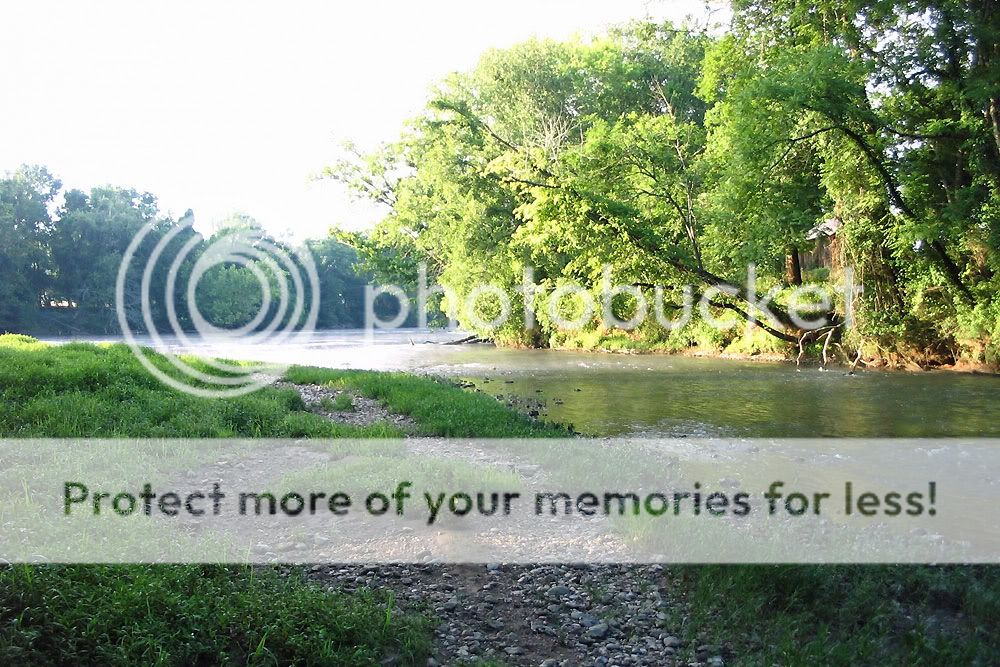
GPS Trip Sharing with Google MapsThis stretch of river between Cartersville and Rome changed its face over the course of the two days. Not because of generation. The Corps of Engineers didn't release any weekend water from Allatoona Dam. Nevertheless, we began on a fairly lazy, clear river on Saturday, and by Sunday, we'd paddled into more opaque water with rockier sections and faster water in spots. Then, the river widened out again and slowed down the last few miles before we took out.
Thanks go out to Darin and Jen, our host and hostess with the mostest. Not only did they feed us and then shuttle everyone over to the river; they also scouted our camping island the week before, an appreciated effort that basically gave us the go-ahead on the paddle. In addition, thanks go out to Richard Grove, a renown paddler in the north Georgia area. Richard got in touch with me after I posted a query about another river on
paddling.net, and before this trip, he provided us with information about the Etowah via email and phone. I've added
Richard's fantastic blog to my Outdoor Links, and an episode of
Georgia Outdoors featuring Richard can be seen
here.
DAY ONE
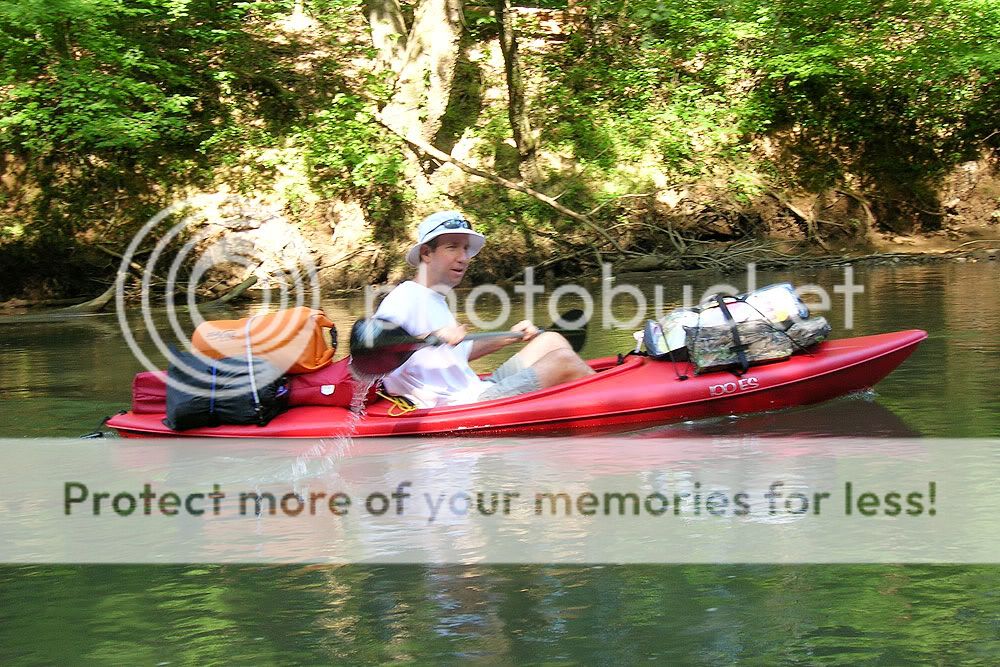
Darin simplified things by offering up his trailer for shuttling kayaks. With two yaks on the roof of his SUV and four yaks stacked on the utility trailer behind, Jen simply had to drop us off at the launch, and we were ready to go. Mike's maiden voyage was a little touch-and-go after he realized he had no below-deck storage on his kayak, but as they say, necessity is the mother of invention. An improvised system of bungee cords and prayers soon had Mike ready for adventure, Nerf football (pillow?) and all.


The river was exceptionally clear for several miles below our put-in. It reminded me of the the upper Chattahoochee or of the Caney Fork here in Tennessee. We meandered along and fished and chatted and just fell into the relaxed rhythm of the river. We'd hoped to catch some striped bass on this trip; an acquaintance of Darin's caught a 43-lb'er just upriver the week before. However, catches both days were limited to a few bluegill and a number of smaller bass. While the weather was superb, it's likely that the cool front put a damper on the fish bite.


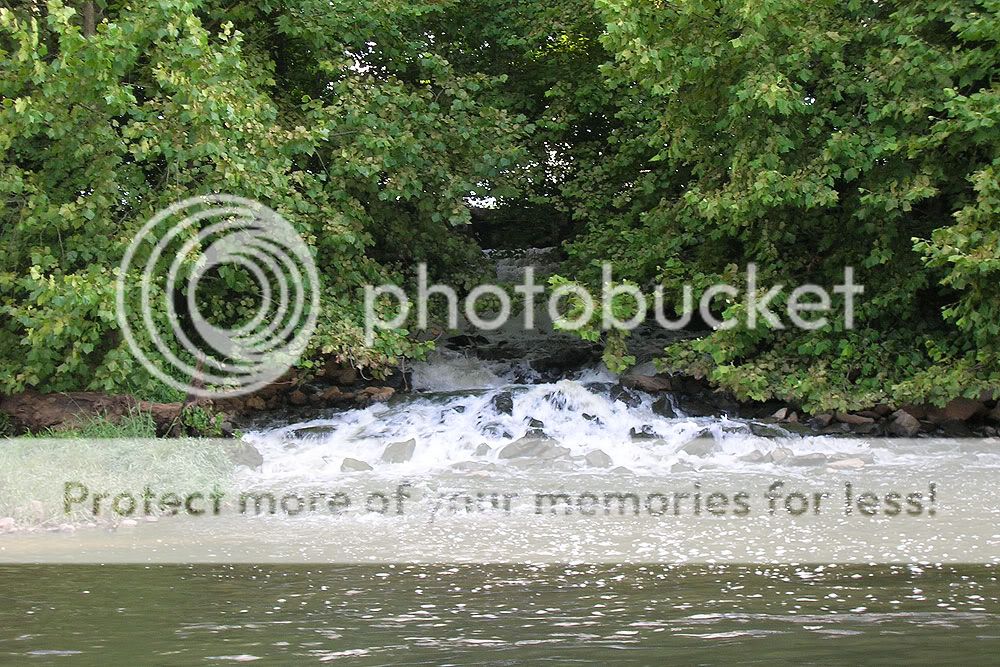
On occasion, the river sped up as we passed through fish weirs, rocky V-shaped traps that Indians in the region used to collect food. Paddling went smoothly save for one incident with a Wilderness Tarpon, a jutting log, a moment of inattention, and a pinned leg and kayak. To Darin's credit, Jimmy said he rode the boat down like a good captain, but alas, before he was able to right the ship, he lost a rod, a rod holder, and his sunglasses. If anyone finds a pair of sunglasses on the bottom of the Etowah, please respond here with your email address. There may be a small reward involving
Hawaiian Shave Ice.


CAMP
We cut our first leg of the paddle a tad close, getting to our camp island at 9 p.m. or a little after. At our site at 34°10'40.85" N & 84°54'54.85" W, a small clearing and fire pit marked where numerous people had sheltered before us, and we were fortunate in three respects. First, the island wasn't already occupied. Second, James found three nice logs from a tree that had been felled and sectioned. Third, there was still enough light to haul kayaks up a rise, pitch tents, collect wood, and establish a fire. Darin brought a small grill grate, and we cooked over coals drug from what turned out to be a nice campfire. Table fare varied from steaks to brats to whatever it was that Mike ate. Clearly, the Improvising Camper Award went to Eric, who sat on his daughter's "Tot Spot" chair and who slept diagonally in his daughter's tent on top of his wife's yoga mat. Purportedly naked. With a machete.


A few camp meal notes follow:
- For dinner, I pre-cooked a baked potato, smothered the outside in butter and kosher salt, wrapped it in foil, and then vacuum sealed it. It was absolutely delicious after being warmed up on some coals. A perfect complement to my ribeye.
- Cliff Bars rock. I just wish I could find them cheaper.
- I was solidly impressed with two other food items in particular. The first was Mountain House's freeze-dried scrambled eggs. With the ham and peppers, it was a pretty decent omelette in a bag. The second was the single-serve packet of Nescafé Taster's Choice instant coffee. Both items were easily portable as well as tasty. I'll carry them afield again.
- I vacuum sealed some raspberries, strawberries, and blueberries for breakfast, but by morning, the raspberries and strawberries had broken down into more of a compote consistency. They were still good, but obviously, blueberries travel better.
DAY TWO The next morning, the Frosty Camper Award went to Michael, who only brought a sheet despite a warning about the cooler temps. He could be found shivering under towels by the campfire. Mike's saving grace was his government training; without a doubt, a less skilled man would have succumbed to the elements. Luckily, we still had some nice coals and, after stoking the fire with the remnants of wood, we gathered around a small blaze while preparing and eating breakfast.


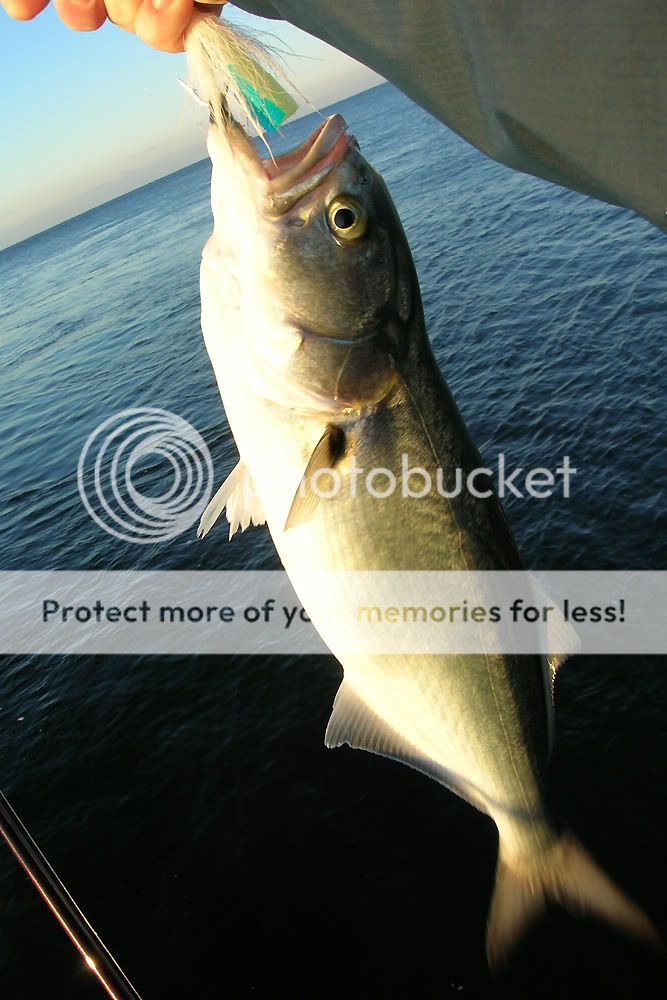
We cleaned up the campsite, packed up the kayaks, buried the few remaining coals, and set off on our 7-mile leg. Eric, on a borrowed lure (make that a stolen lure), hung a nice little bass before we'd even gotten past the island. Turns out that fish, at a massive 14 ounces, would win him the Big Kahuna Award, a prize established in 2002 that rotates to the big-fish angler at various camping/fishing trips. As soon as he sends me cash for my Rapala, I'll be mailing him the trophy.


Past the island at the northern pinnacle of a long south-to-north stretch of the river, we hung out for a while and fished at
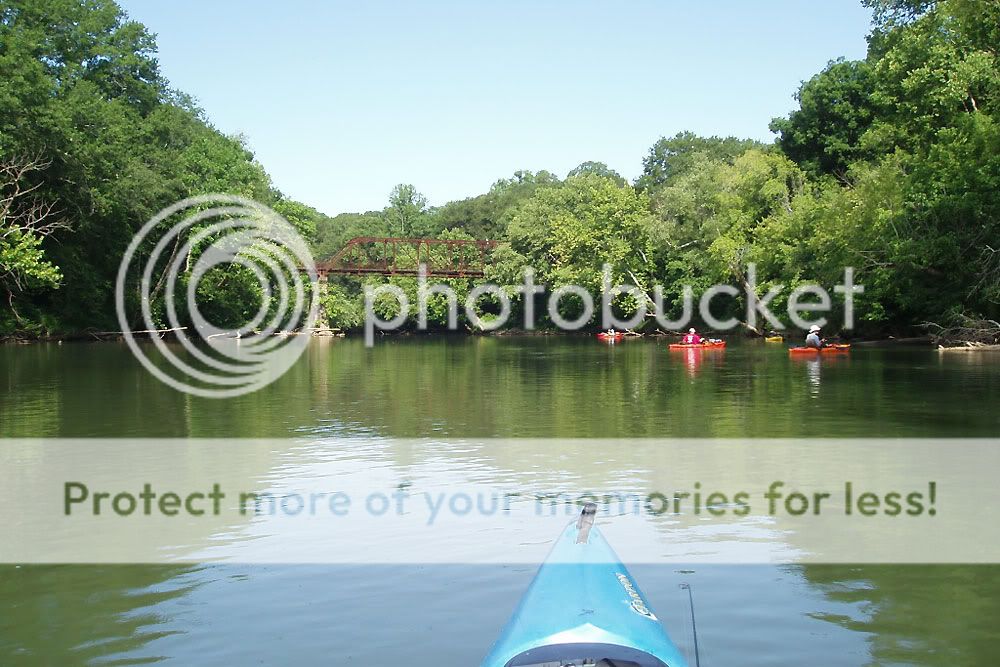
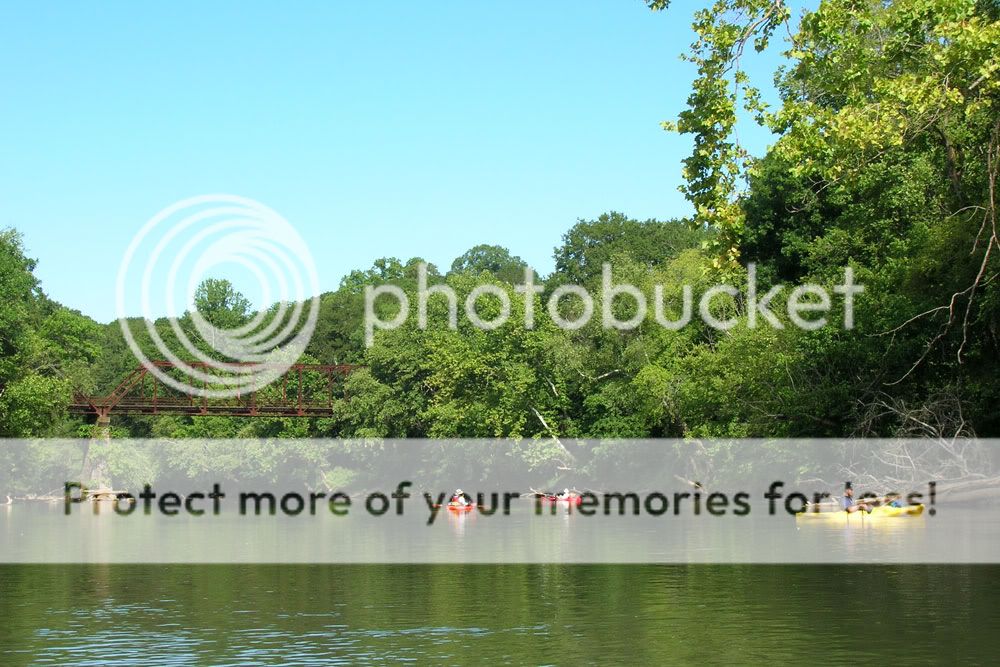
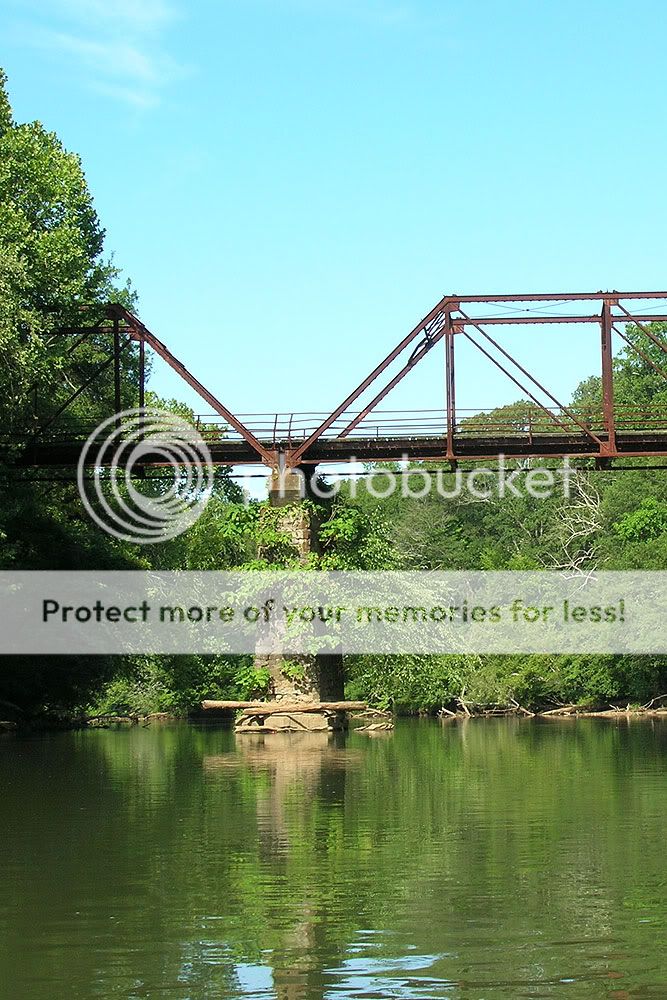
Hardin Bridge. Designated as an historic bridge, this platt-through-truss design was built in 1930 by Austin Brothers Bridge Company. A pretty bridge, no doubt. Mike even beached his yak and hiked up to take a few pics from the bridge's deck.


The penultimate section of our paddle featured a river strewn with boulders and rocks. Picking our way through the outcroppings and trying to choose the best routes made for interesting paddling. We experienced a few stuck boats and a bit of bilge pumping when a sideways tip allowed water inside a cockpit, but overall, we made it through quite well. By the time we entered the home stretch, however, the river had widened and slowed and only offered the occasional set of rapids.


At the very end of the paddle, when it was pretty clear no one was going to top 14 ounces, I got a shot of Eric with his yellow, rubber, Eagle Claw rod that I believe he chose only because it matched his boat. The big shit-eating grin is indicative of the fact he'd already planned out a spot in his office for the Big Kahuna plaque. Ladies and gentlemen, I give you The Big Kahuna for annual year 2009.

A few gear notes here before the last act:
- Though Mike "pack mule" Dunn was impressive, the real work horse was the Pamlico 100. Between fishing gear and camp tools, I probably took 10 to 15 pounds too much stuff, and the Pamlico handled it like a champ. The back hatch was stuffed with five dry bags; the nose had a dry bag and a tackle box; and the bow held a Seattle Sports kayak cooler. The boat rode plenty high and the bow/stern handles were up to the weight.
- The aforementioned cooler did a nice job of keeping my cold food items cold. Darin froze a few bottles of water for me, and that was all I needed to keep my dinner from spoiling. That night and next day, I drank the water. Darin packed out my plastic.
- The MSR Pocket Rocket isobutane stove boiled multiple batches of water in quick succession without a hitch. Jimmy used a less expensive version bought at Wal-Mart with equal success. Aside from the problems with recycling the fuel canisters, these small stoves offer a lot of output in a relatively small package.
- The Camelbak water bladder is just a smart way to transport water for camping. Mine was a handy reservoir for cooking duties in particular.
CODAOur drive from the woods at the take-out was an experience all unto itself. Instead of writing a short story here, I am just going to attempt a narrative collage of descriptive phrases. James, I'm glad you hung on tight.
Acura MDX.
One trailer.
Six kayaks.
Seven passengers.
"Are you sure we can go that way?"
Mud-filled ravines.
Leaning vehicle.
Heads shaking.
"I think we can do it."
Spinning wheels.
Muddy kayaks.
Jerky starts.
Heads shaking.
Nervous jokes.
A big surge.
Mid-air vehicle.
Trailer off hitch.
James on hood.
Mud down below.
SUV in motion.
Unstuck.
Relief.
Trailer reconnecting.
Route retracing.
Heads re-shaking.
"Would you mind moving your Tahoe?"
Youthful driver.
Full reverse.
Wrecked Tahoe.
Collective groans.
Heads shaking.
Giant hump.
Uncomfortable scraping.
Nervous laughter.
Rattling trailer.
Heads shaking.
Two humps now.
Theory of momentum.
Gritted teeth.
Grating noises.
Grinding scrubs.
Gasps and grimaces.
Heads shaking.
"Ouch, that was the transmission."
Paved road.
Sweet freedom. |