 This Esbit Solid Fuel Cookset makes a lightweight, compact package for heating water. Fit and finish on my set is quite good, and the stove base—built to receive a hexamine solid fuel tablet—nests perfectly inside the lidded cup with plenty of room to spare for several tablets, a cleaning sponge, etc. Moreover, this base has a large cut-out on one side and thus, in a pinch, could be pressed into service as a twig stove. The 585 mL cup/cookpot easily hold two cups of water and has several desirable features that include: pressed-in volume measurements from 200-400 mL / 8-16 oz., fold-out handles with insulation, a small pouring spout, and a well-fitting lid that also features a folding handle. The set comes with a nylon mesh bag that makes for easy carry, and when nestled inside the bag, is roughly the size of a softball.
I ran three trials in testing this stove. All used MPI/"Grabber" brand hexamine solid fuel tablets. Each trial used 2 cups of water that was 36 degrees at the outset. All trials also employed a small piece of aluminum foil in the tablet recess for easier cleanup.
Trial 1: With a covered cup, I used one solid fuel tab laid flat in the tablet recess. I peeked in on the water at 7, 9, 11, and 13 minutes. The solid fuel tablet burned out completely around the 13 minute mark. Water was hot and steaming, but it never came to a boil.
Trial 2: With a covered cup, I used one solid fuel tab laid flat in the tablet recess. I kept the cup covered and looked in at the 11 minute mark as the solid fuel tablet's flame was starting to weaken. Again, water was hot and steaming, but it did not boil.
Trial 3: With a covered cup, I used two solid fuel tabs standing side-by-side on end. This tactic (a) generated more heat, and (b) put the flame closer to the bottom of the cup. The flame did blossom outside of the stove base more readily, and for a moment during the initial burn, I worried about melting the plastic insulation on the handles. No damage resulted, however. The water began to boil around the 10 minute mark, and when checked at the 12 minute mark, the water was at a rolling boil. The tablets totally died out around the 14 minute mark, and the rolling boil only lasted a short while.
Conclusions: With one tablet, this Esbit solid fuel set is best suited for heating water that is already treated. In the first two trials, water was sufficiently hot to make hot drinks or to constitute freeze-dried meals. As my third and final trial showed, the Esbit set can boil water, but this result required two of the hexamine tablets. The tablets do burn dirty and produce a lot of soot. Thus, a small piece of foil works well to limit soot accumulation in the stove base, and I recommend carrying a scrub sponge for clean-up of the cup. Otherwise, a paper towel or bandanna could be used to contain the soot and prevent it from rubbing off inside a pack. At just under 7 ounces (not counting fuel, sponges, etc.), the set is a fairly light option for day hikes or for overnighters with freeze-dried meals.
Two final comments: (a) I would not rely on this stove for more traditional cooking unless I were using it as a twig stove or unless I had a lot of solid fuel tabs at my disposal. (b) Of course, this cookset is not as light as titanium, but it's also considerably cheaper than titanium. The set runs around $25 to $30 from most merchants, though I lucked up and caught it on clearance for $10. However, it's still a good value at the $25 price point.

Showing posts with label Gear. Show all posts
Showing posts with label Gear. Show all posts
Wednesday, September 21, 2011
Esbit Hard Anodized Aluminum 585mL Cookset (Review)

Tuesday, May 10, 2011
Gear Notes - Hydrolink Filter Adapter, Sea to Summit AlphaLight Long Spoon, Pelican Mini Flasher, GSI Flasks, Jet Scream Whistle, Panasonic DMC-TS2
Following the precedent of a previous Gear Notes post, below I offer up thoughts on more outdoor gear that I've accumulated. Each image, when clicked, leads to an enlarged photo.
Camelbak HydroLink Filter Adapter Kit At REI recently, I came across this handy gadget, the Camelback HydroLink Filter Adapter kit which allows for a retrofit any Camelback hydration system. With this set-up, the bite valve becomes easily detachable, and the kit includes an adapter for a water filtration system. Thus, I can now hook up my MSR MiniWorks filter directly to any Camelbak reservoir with the connector and pump filtered water directly inside. This rig eliminates the need to open the reservoir at the top and lessens chances of water spillage and/or contamination. |
Sea to Summit AlphaLight Long Spoon If you've ever eaten any freeze-dried dinners in the aluminum pouches (my favorite brand is Mountain House), then you know that most cutlery is too short to reach the bottom without cramming your hand partially into the pouch. Enter the Sea to Summit AlphaLight Long Spoon. Over 8" long, the spoon gives a backpacker the reach to snag that last little morsel without getting sticky hands. Even better, as the name attests, the spoon is light at only .4 ounces (12 grams) because it's made out of an annodized aircraft aluminum alloy called 7075-T6. No fancy metallugical descriptions are really necessary though. It's a spoon. It's long. It works. |
Pelican 2130 LED Mini Flasher  Not that long ago, I read about a Georgia kayak fisherman whose vessel was overrun by a bass boat motoring out of a cove. The kayak fisherman barely managed to abandon ship and get clear of danger, and his kayak was mangled by the bass boat's prop. The lesson here? Carry a bazooka on the starboard side of your 'yak, and be prepared to use it. However, if you don't possess the necessary Terminator strain, you might be well advised to think about visibility on the water. Lots of bright, LED running lights are on the market, but I recently purchased a small flasher that can increase visibility even further. The Pelican 2130 Mini Flasher clips to a hat or PFD and emits a steady red flash that Pelican claims can be seen half-a-mile away. Two coin-cell batteries last 100 hours, and the light is sealed and submersible, making it a durable and valuable addition on the water. |
GSI Flasks After a hard day of hiking, a snort of bourbon or Scotch around the campfire is one way of easing tired muscles and facilitating a good night's sleep. For a long time now, I've thought about purchasing one of the flasks made by Nalgene, but I recently discovered that GSI also makes a quality plastic flask in two different sizes: a ten-ounce hip version and a longer eighteen-ounce version. Both are made of BPA-free resin and have a shot cap; moreover, they feature a non-slip insert over a thick-walled, clear body. These flasks are far and away better than the cheapies we used in college, even though the GSI versions are comparably priced. |
Ultimate Survival Technologies JetScream Whistle With a nod to my Irish heritage, I've taken up the tin whistle, aka the penny whistle, and have even managed to learn a dozen or more tunes. What does this have to do with the JetScream? Well, not much really. But tin whistle afficionados often refer jokingly to WhOA, or Whistle Obsessive Acquisition disorder, and apparently, I have the same disorder when it comes to survival whistles. One need only look at this page in order to be convinced. In my defense, however, I bought the Ultimate Survival Technologies JetScream because I needed to spend a few more dollars to get free shipping on an order. It is a good whistle though—compact and sleak and at 122 decibels, one of the loudest on the market. Its pealess design prevent clogging, and it fills an important slot in the oft-invoked "necessities" of outdoor survival. |
Panasonic DMC-TS2 Digital Camera I still have the iPhone 3G. What I'm trying to say is that I'm not one of those folks who camps overnight to get the latest and greatest electronic gadgetry as soon as it's out. I like quality electronics, but I tend to keep them as long as I can and get my money's worth. As such, I'm reporting here on a camera that is a generation old. The Panasonic DMC-TS2 has recently been superceded by the TS3. That means two things. One, if you must have the latest and greatest, you can stop reading. Two, if you don't mind an older model, you can get a really good deal nowadays on the TS2. I've had the camera about a year now, and I've been nothing but pleased. Its 14.1 megapixel resolution, Leica glass, and AVCHD movie capability allow for sharp pictures and videos. I also appreciate its crazy fast start-up time, a feature that allows you to get a picture quickly if the power is off. Even better, the camera is a tank. It is dustproof, waterproof to 33 feet, dropproof up to two meters, and freezeproof to -10 degrees Celsius—all features that make it an exceptional camera for outdoor activities. I must admit I'm intrigued by the GPS features on the brand new TS3, but for now, I'm going to stick with my current camera and wait for the reviews. |
Friday, August 6, 2010
Gear Notes - Hiking Shoes, CamelBaks, Lizard Skins Tube Insulator, capCAP, Maratac AA Flashlight, Light My Fire Titanium Spork
For a while now, I've intended to put up some thoughts on a variety of products for the trail. While more extensive reviews may be forthcoming, below are some initial impressions about the items. Each thumbnail image, when clicked, leads to an enlarged photo.
A Tale of Two Hiking Shoes This past spring, I picked up a pair of Keen Siskiyou hiking shoes. I always have to debate 12's and 13's when I shop for footwear, and the size-13 Keens slipped horribly even when cinched tight around thick hiking socks. As a result, I wound up purchasing the 12's which I thought to be fine because of the wide toe bed particular to Keens. Unlike a lot of 12's, these shoes did not pinch my toes. I'd read good reviews regarding the comfort of Keens, and in the store, the shoes felt great. Indeed, for about a month thereafter, they worked out well in a casual, everyday capacity. But on May 20, I hiked Ganier Ridge with my son and found the shoes to be unfit for the trail. Best I can tell, the problem stems from two factors. First, the top lace holders (nylon loops instead of eyelets) sit far enough south that my foot can shift forward before the laces catch. Second, because I bought the 12's instead of the 13's, I have less toe space to spare. The on-trail result was/is painful, stubbed toes. Coming down from Ganier Ridge, no matter how tightly I laced, every step resulted in slippage and toes bumping the end of the shoe. The lessons here? (1) Test all hiking shoes using an incline before purchasing, and (2) if a purchase is at all questionable, "keep it in the co-op." This last bit roughly translates as: buy from REI where 100% satisfaction is standard policy. Since I couldn't return the Keens, I still have them, but they've been relegated to sidewalk duty. 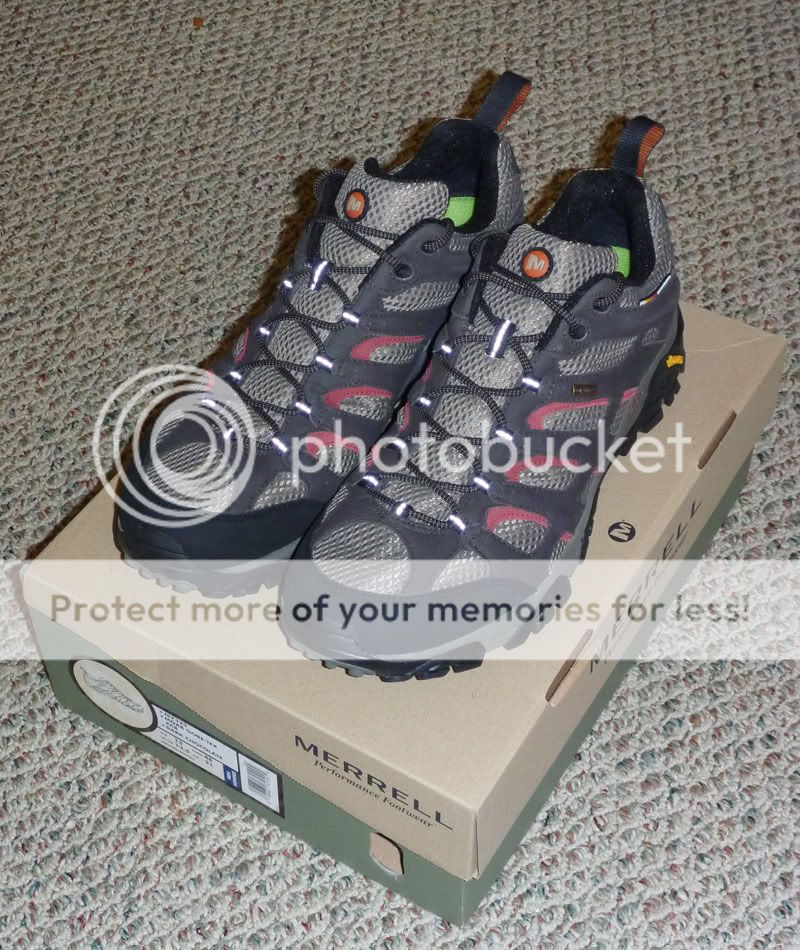 After purchasing the Keens, I donated my faithful old North Face hiking shoes (which had served me well in five different countries) to Goodwill. So... after the Ganier Ridge & Keen fiasco, I had no hiking shoes that I would actually use on trails. For a while, I tried to spot a good shoe deal online, but I finally settled on a pair at my local REI brick and mortar, which offered 20% off one item as well as a sale on Superfeet insoles. The shoes, Merrell Moab Gore-Tex XCR's, possess several features I like. For instance, they have Vibram outsoles, which are the equivalent of Michelin tires when it comes to hiking shoes/boots. Vibrams offer fantastic wear resistance and good traction at the same time. In addition, though the Merrells do utilize lace loops, the top two lace holders are eyelets which allow me to tighten the fit more than with the Keens. Finally, the Merrells offer a waterproof GoreTex upper. Already, I've taken these shoes into spots with high, wet grass, and they worked as advertised—keeping my feet dry and comfortable. |
| The Camel's Two Humps Early in the life of this blog, I posted a review of the CamelBak Blowfish. Since then, I've added two more CamelBak packs to my stable. Both are 2009 models which, in CamelBak terms, means that colors and styling may have changed. It also means that I was able to get the packs at discount prices rather than retail. The packs have been "upgraded" with a CamelBak Big Bite Valve Cover and a Lizard Skins tube insulator (see next entry). Both feature OMEGA reservoirs with CamelBak's lifetime warranty as well as sternum straps and air mesh back panels. 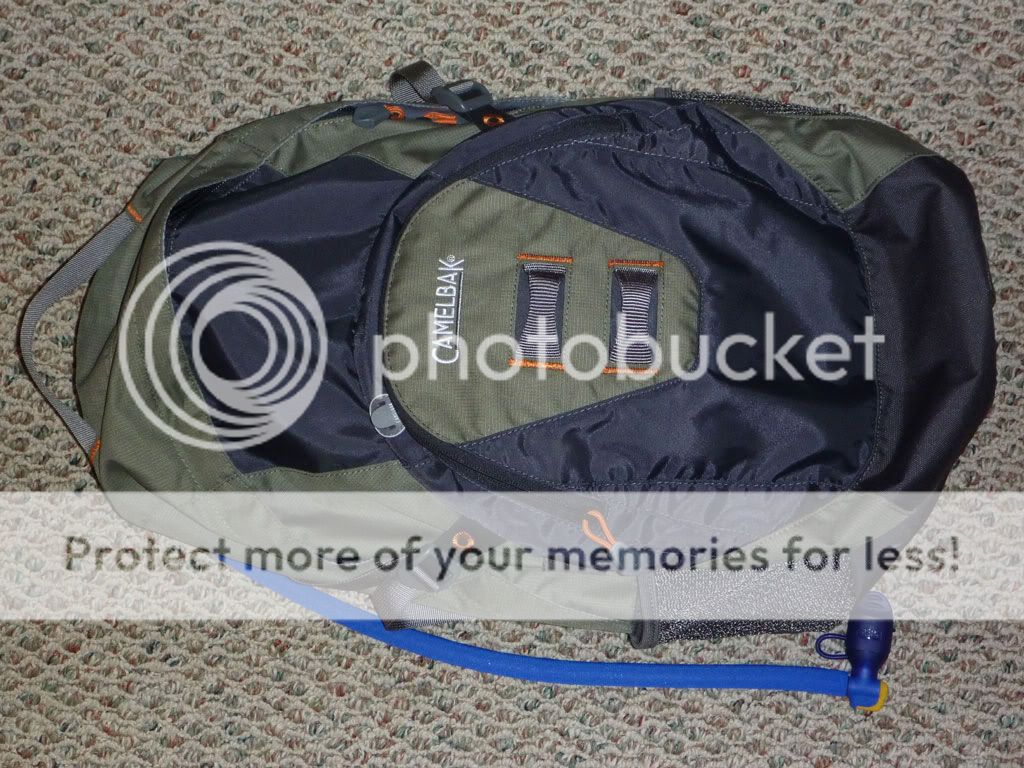 The first is the Cloud Walker, which comes with a 70-ounce (2.1 liter) reservoir, a spacious main compartment, and a smaller organization space. The reservoir loads into a separately zippered, insulated section on the back of the pack. Overall cargo capacity is 1340 cubic inches, which makes the Cloud Walker a good choice for a day pack. I recently used the pack while helping the Nashville Meetup group clean the Volunteer Trail at Long Hunter State Park. The pack comfortably carried in everything I needed, and the 2L of water gave some respite from the oppressively humid heat. 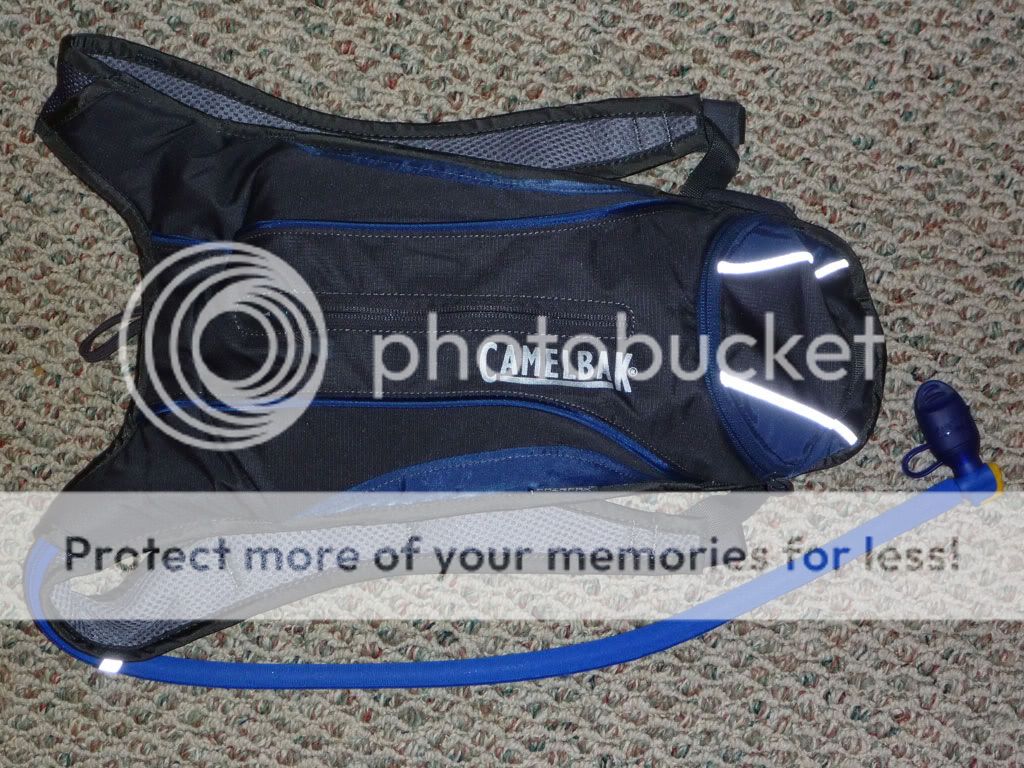 The second pack is the Fairfax, which is billed as a low-profile training option for running and mountain biking. Mr. C and I found this version at REI while looking for a hydration pack that would fit his frame. CamelBak does offer kids models like the Skeeter and the Mini M.U.L.E. However, we found that the Fairfax fit well with the shoulder straps cinched tight, and an advantage of the pack is that he can let out the straps as he grows. However, the price tag, at nearly $50, was a deal breaker. Google Shopping came through for me though, and I found the pack on closeout at one retailer for just $20. At that price, I went ahead and bought a Fairfax for each of us. The pack features a 50-ounce (1.5 liter) reservoir, and 130 cubic inches of storage for things like keys, wallet, bike tool, energy bars, etc. Like the Cloud Walker above, the Fairfax has an insulated reservoir compartment that helps keep water cool. Already, I've used mine on a day hike around Couchville Lake as well as on some runs around my neighborhood. |
Lizard Skins Tube Insulator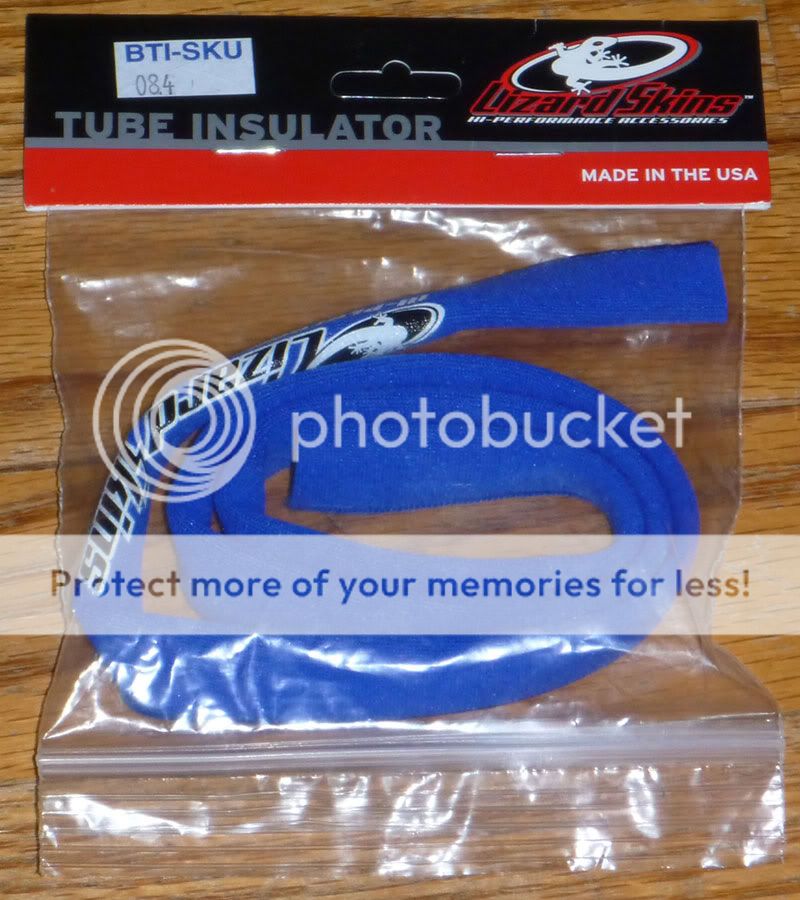 In a past post, I briefly mentioned the Lizard Skins tube insulator in conjunction with my first CamelBak pack. It is simply a neoprene sleeve that fits over the reservoir's drinking tube. If you've ever used a CamelBak on hot days, you will understand the beneficial utility of this device. Without any insulation, water inside the tubing warms up after a short while because of exposure to outside heat. As a result, the first drink of water can be uncomfortably hot, and my protocol in such an instance is: sip, spit, sip, drink. The Lizard Skins tube insulator, however, prevents the hot gulp and saves water in the process. This product works well enough that I invested in three more—one for C's pack and two for my packs mentioned above. |
capCAP Nalgene Accessory Humangear's capCAP is simply a lid with a lid. It's the sort of thing you wish you'd patented before the other guy thought of it. The top lid covers a drinking spout that turns any wide-mouthed Nalgene bottle into a more ergonomic vessel. The capCAP also works with similarly threaded water bottles like the CamelBak Better series. The spout prevents sloshes while walking and drinking, and it makes pouring more exact. The question that arises, of course, is: why not just get a water bottle with a built-in straw or spout? And the answer is that the wider opening still has utility. Wide-mouthed Nalgenes couple perfectly with water filters like my MSR Miniworks EX—a feature that makes water filtration much easier. |
Maratac AA LED Flashlight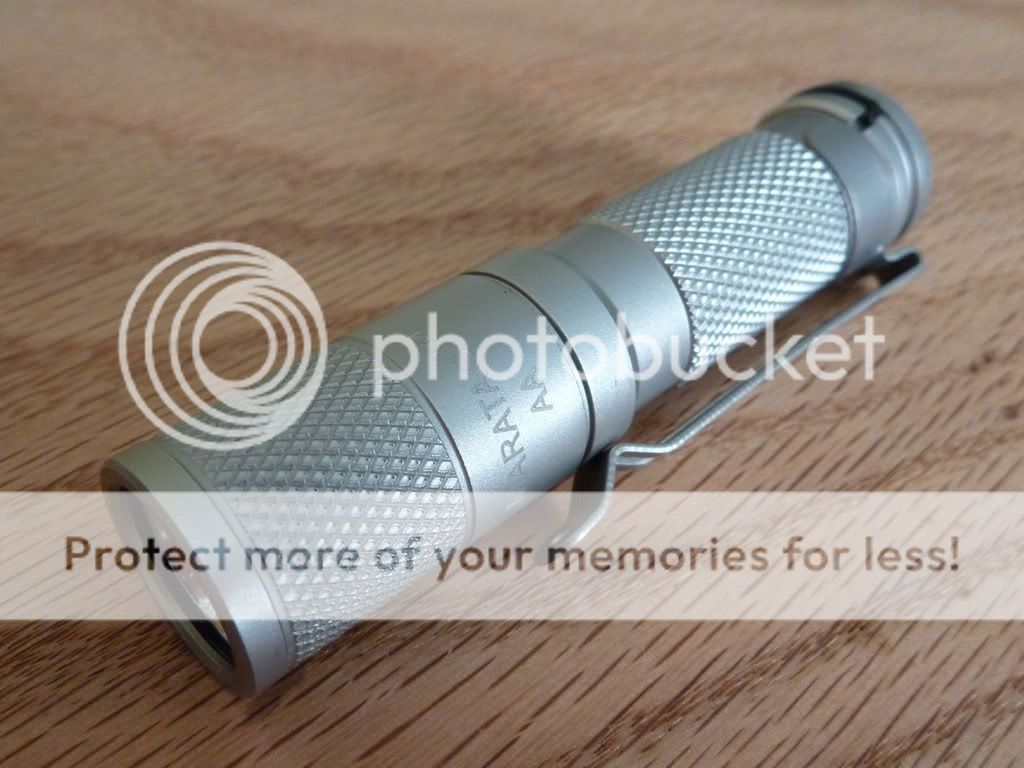 For some time now, I've enjoyed owning and using the smaller AAA (battery size) version of this light. Both the AAA and the AA lights are offered exclusively by countycomm.com—an outfit that specializes in all manner of gadgets and gizmos handy for outdoor use. What attracted me to the Maratac AA flashlight is the longer burn time and greater output. In addition, the AA version uses the same batteries as my Garmin GPS unit, so I have one less battery type to worry about when I go afield. The flashlight features a Cree Q5 emitter with a life span up to 50,000 hours, and it offers three light settings. On low, the light emits 1.5 lumens for 100 hours. On medium, it puts out 18 lumens for 70 hours. And on high, it reaches 85 blinding lumens for two hours. Think spotlight in a very small package. One other feature I like is that the pocket clip can be reversed to turn the Maratac AA into a cap light for hands-free use. |
Light My Fire Titanium Spork What can I say? It's a spork. It's titanium. For some, it's a symbol of modern civilization and engineering. Ooookay... maybe. However, it's not exactly an Apollo spacecraft. The first spork I remember was the plastic KFC version that never quite allowed you to get all the mashed potatoes out of that styrofoam cup. Since then, sporks have come a long way in terms of design and materials. This titanium Light My Fire version is modeled on a successful polymer design, and its stand-out feature is that, unlike many popular models that combine the spoon and fork in hybrid fashion, you get a more true-to-life, separate spoon and fork. One edge of the fork features serrations, and while I doubt I'd want to tackle a T-bone with this so-called "knife," it looks useful for smaller items. Coming in at only 17 grams, which is comparable to my Snowpeak Ti spork, this tool should serve me well as a lightweight utensil for backpacking. |
Subscribe to:
Posts (Atom)